



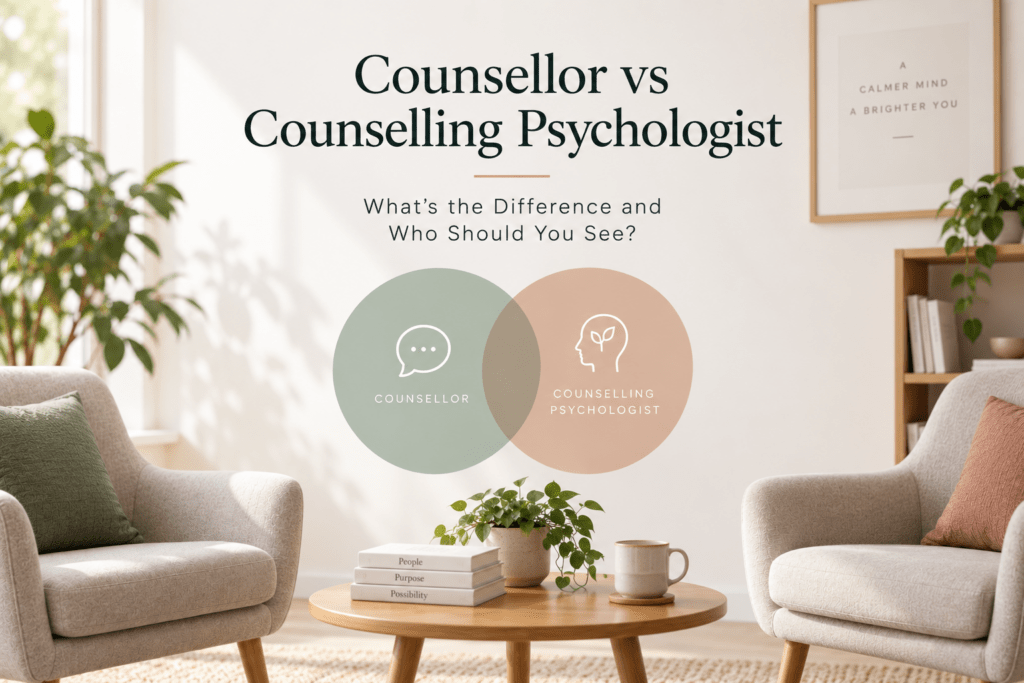
Counsellor vs Counselling Psychologist in Singapore: What’s the Difference and Who Should You See?
Singapore
You may have reached the point where you want support, yet choosing who to see has become another source of uncertainty. Should you book a counsellor? Would a counselling psychologist be more suitable? Do you need a diagnosis before anyone can help?
If you are looking for counselling or psychotherapy, a professionally trained counsellor is a strong place to begin. You can seek help with anxiety, low mood, emotional exhaustion, relationship concerns or recurring patterns without first having to put a clinical name to your experience.
At The Lion Mind (Lion Counselling Pte. Ltd.), counselling is central to our practice. We combine professional counselling training with a foundation in psychology to help you understand what you are going through and work towards meaningful change.
What Is the Main Difference?
Counsellors and counselling psychologists follow different professional training pathways, with substantial overlap in therapeutic work.
A professionally trained counsellor studies counselling theories, therapeutic skills, ethics and supervised practice. A counselling psychologist completes professional training in applied psychology, which can include psychological intervention, assessment, testing and research alongside supervised practice.
Both may provide counselling and psychotherapy. Some counselling psychologists also offer particular psychological assessments, depending on their training and current practice.
For someone seeking therapy, the practical question is whether the practitioner has the counselling skills, relevant experience and approach to support the concerns they bring.
What Can a Counsellor Help You With?
Counselling provides professional support for difficulties that affect how you feel, think, relate to others and manage daily life.
You might be functioning at work while privately worrying about every mistake. You may feel increasingly disconnected from people you care about. Perhaps the same conflict keeps returning, or a difficult experience still occupies more of your mind than you would like.
A counsellor can help you explore these experiences, recognise patterns and develop ways of responding that fit your circumstances.
For persistent worry, overthinking or avoidance, anxiety counselling at The Lion Mind can focus on understanding what keeps anxiety going and practising more manageable responses.
For continuing low mood, self-criticism or loss of motivation, depression counselling and psychotherapy can provide support with emotional distress, daily functioning and reconnecting with what matters to you.
Counselling can also help with grief, stress, burnout, boundaries, life transitions and relationship difficulties. Your concern does not have to reach a particular level of seriousness before you deserve attention and support.
Counselling Involves Active Therapeutic Work
Listening creates the foundation for counselling. From that foundation, your counsellor can work with you to understand difficulties and consider practical changes.
Depending on your needs, sessions may involve psychological explanations, exploring beliefs, practising coping skills, preparing for conversations or reviewing what happened when you tried a different response.
For example, someone who repeatedly agrees to extra work may explore their fear of disappointing others. They might then practise explaining a limit, consider the likely difficulties and review their experience in the following session.
Appropriately trained counsellors can use Cognitive Behaviour Therapy and other therapeutic approaches. Relevant training and competent application matter when choosing someone to provide a particular therapy.
Why Professional Training and Registration Matter
Professional counselling requires more than being a sympathetic listener. It involves therapeutic knowledge, ethical responsibilities, supervised experience and ongoing development.
The Singapore Association for Counselling maintains Registered Counsellor accreditation with education, counselling-practice and supervision requirements. SAC’s registration guidance explains this pathway.
When reading a profile, distinguish association membership from Registered Counsellor status. Check the exact credential and the practitioner’s experience with your concerns.
A training-hours comparison alone cannot tell you who will be the better therapist. Different professional pathways count activities differently, and qualifications should be considered alongside current competence and therapeutic experience.
The Psychology Foundation at The Lion Mind
The Lion Mind’s counselling model brings psychological knowledge and professional counselling skills together.
The Lion Mind’s counselling practice combines an undergraduate foundation in psychology with postgraduate counselling training. Psychology contributes understanding of behaviour, emotion, cognition and research. Counselling training develops the skills required to apply therapeutic approaches within a professional helping relationship.
That preparation supports careful thinking about your concerns while keeping the session centred on your lived experience.
You may want practical strategies, time to process something painful or help understanding why a pattern keeps returning. The direction of counselling develops around your needs, goals and circumstances.
Counselling Assessment and Psychological Testing
Counsellors assess concerns as part of responsible therapeutic work. This can involve discussing your history, emotional state, coping, strengths, goals and safety. Screening questionnaires may help clarify the impact of difficulties or track changes over time.
Formal psychological testing is a separate service. It may involve specialised tests, interpretation and a written report for a particular question. The Singapore Psychological Society’s professional training guidance includes assessment and testing among the areas of applied psychology training.
If you need a specific assessment or report, check whether the practitioner offers that service and has the relevant competence. For many people seeking counselling, therapeutic work can begin without formal psychological testing.
Can You Begin Counselling Without a Diagnosis?
Yes. You can book counselling because you feel overwhelmed, stuck, anxious or unlike yourself, even if you are uncertain why.
At The Lion Mind, the first session focuses on understanding your concerns and identifying a useful direction. Our counselling service does not include formal psychological diagnostic testing or medication prescription.
Where diagnostic clarification or medical care would be helpful, your counsellor can discuss appropriate next steps. Counselling can continue alongside medical care when suitable, maintaining support for the emotional and behavioural work you are doing.
Choosing a Counsellor at The Lion Mind
Look for a practitioner whose training and experience are relevant, who explains their approach clearly and with whom you can begin speaking honestly.
You should be able to ask questions, describe what feels helpful and raise concerns about the direction of sessions. That collaboration helps make counselling purposeful and responsive.
Our guide to choosing a counsellor in Singapore explains these considerations in more detail.
If counselling or psychotherapy is the support you are looking for, you can begin directly with The Lion Mind. You do not need to resolve every question about professional titles before taking that first step.
Book a counselling appointment with The Lion Mind and start with the concern that matters most to you.
Related articles
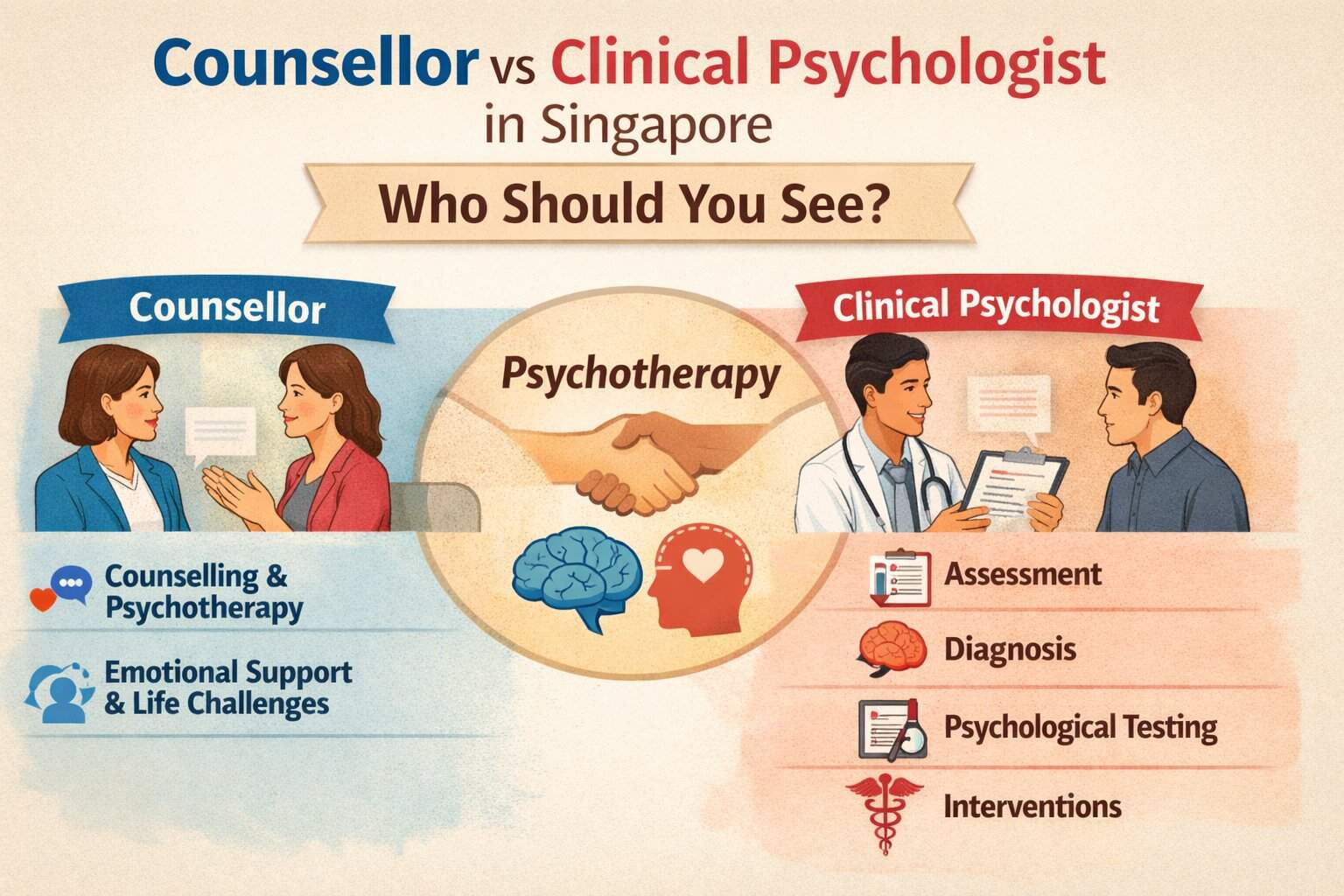
Counsellor vs Clinical Psychologist in Singapore: Who Should You See?
If you like what you read, follow us on Facebook, Instagram, LinkedIn, or Tik Tok to get the latest updates.
Have a question? Reach out to us through our contact form or WhatsApp.
Want to speak to our clinicians? Book your appointment here!