
Post Picture

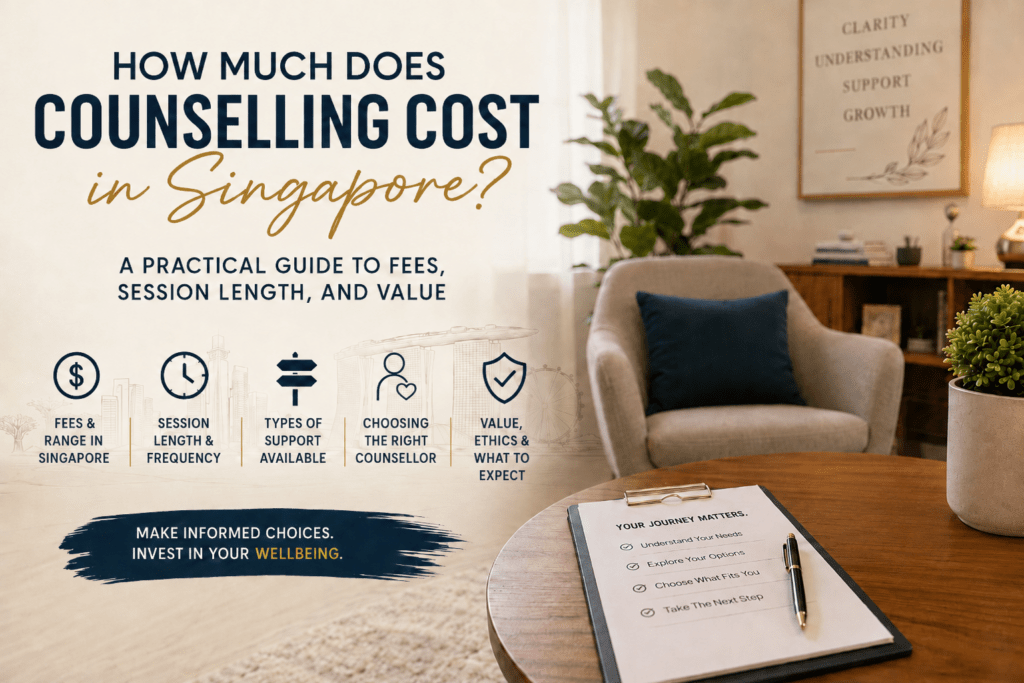
How Much Does Counselling Cost in Singapore? A Practical Guide to Fees, Session Length, and Value

Singapore

Jul 16 2026

Counselling fees in Singapore vary depending on where you seek support, who you see, the length of each session, the practitioner’s qualifications, and whether the service is school-based, subsidised, workplace-funded, public healthcare-based, or private.

Some counselling support may be free or subsidised through schools, community services, social service agencies, public healthcare pathways, or workplace Employee Assistance Programmes. Private counselling and psychotherapy are usually paid out-of-pocket unless covered by an employer, insurer, or other arrangement.

At The Lion Mind, counselling sessions with Mr James Chong are listed as:

  • $200 per physical session
  • $250 per online session
  • Up to 50 minutes per session

The Lion Mind also states that all sessions must be arranged in advance, and walk-ins are not allowed.

When comparing counselling costs, it is important not to look at price alone.

A lower fee does not automatically mean poorer support. A higher fee does not automatically mean better support. The more important question is:

What kind of support do I need, and is this provider suitable for me?


Understanding the Mental Health Support Landscape in Singapore

Singapore has different types of mental health and counselling support. These services do not all serve the same purpose.

A school counsellor, polyclinic doctor, medical social worker, psychologist, psychiatrist, community counsellor, private counsellor, psychotherapist, and life coach may all be part of the broader helping landscape, but their roles are different.

Understanding these differences can help you choose the right support.


School Counselling in Singapore

School counselling usually supports students’ social-emotional development, mental wellbeing, coping, and school functioning.

In schools, counselling support is often closely tied to helping students remain safe, emotionally supported, and able to continue learning. MOE describes school counsellors as supporting students’ mental health and social-emotional development, with roles that include early identification, referral of students with mental health or social-emotional concerns, consultation, and staff or parent training.

School counsellors may support students with concerns such as:

  • school stress
  • exam anxiety
  • peer conflict
  • bullying
  • family difficulties
  • emotional distress
  • self-harm concerns
  • suicidal ideation
  • adjustment issues
  • behavioural or social-emotional concerns

For more severe or complex mental health needs, students may be referred to specialised services. MOH states that students who need further support may be referred by school counsellors to REACH teams for mental health assessment and intervention. MOE has also stated that students with suicide risk may be referred urgently to REACH teams or hospital emergency services for further intervention.

School counsellors also play an important safeguarding role. In suspected abuse cases, school leaders, teachers, school counsellors, and student welfare officers are trained to identify and report child abuse to the relevant authorities. MOE has also stated that schools report suspected abuse cases to the National Anti-Violence and Sexual Harassment Helpline and provide ongoing monitoring and support for affected students.

This means school counselling is not simply “talking to students”. It can involve emotional support, risk assessment, school-based intervention, safeguarding, parent engagement, and referral to more specialised services when necessary.

However, school counselling is not the same as private counselling or psychotherapy. School counselling takes place within an educational institution, and its primary context is student wellbeing, safety, and school functioning.


Polyclinics and Public Healthcare Mental Health Support

Polyclinics and public healthcare services are important entry points for mental health support in Singapore, especially when a person may need medical assessment, diagnosis, medication, referral, or subsidised care.

MOH states that polyclinic mental health services are delivered by multidisciplinary teams that may include family physicians, nurses, psychologists, and medical social workers, supported by psychiatrists from restructured hospitals or IMH through a shared care model.

However, not every polyclinic may provide the same kind of counselling or psychological service on-site. Some polyclinics may have access to psychologists, while others may involve medical social workers, family physicians, nurses, or referrals to external services depending on the clinical pathway and available resources. SingHealth Polyclinics, for example, lists psychology services for adults with mild to moderate concerns such as depression, anxiety, insomnia, and life adjustment at selected polyclinics.

Polyclinics may be suitable when a client needs:

  • mental health assessment
  • medical review
  • diagnosis
  • medication support
  • public healthcare referral
  • subsidised care
  • follow-up for mild to moderate mental health conditions
  • referral to specialist care if needed

A common misconception in Singapore is that receiving a psychological or psychiatric diagnosis automatically means the problem is cured.

A diagnosis is not a cure.

A diagnosis may help name or clarify a condition. It may guide treatment planning, medication decisions, workplace or school accommodations, and referral pathways. However, recovery usually requires appropriate support, therapy, coping changes, environmental support, medical care where needed, and time.

MOH separates assessment, diagnosis, treatment, and follow-up care as parts of mental health services in polyclinics, acute hospitals, and IMH. This distinction is important because diagnosis is only one part of care.


Community and Subsidised Counselling Services

Community and subsidised counselling services play an important role in improving access to mental health support in Singapore.

The National Council of Social Service lists supported counselling services that provide accessible and affordable counselling through approved counselling service providers. NCSS states that subsidies are available for the first six counselling sessions, with additional sessions charged at the counselling centre’s standard rates.

Subsidised counselling may be helpful for clients who need support but are concerned about private counselling fees.

It may support concerns such as:

  • anxiety
  • depression
  • stress
  • grief
  • self-esteem concerns
  • identity concerns
  • relationship issues
  • couple or family concerns

However, clients should check:

  • eligibility criteria
  • appointment availability
  • waiting time
  • whether the subsidy applies to them
  • number of subsidised sessions
  • fees after the subsidised sessions end
  • whether the centre is suitable for their concern
  • whether online or in-person sessions are available

Subsidised counselling is valuable, but it may not always offer the same level of scheduling flexibility, privacy, clinician choice, or continuity that some clients may prefer in private practice.


Workplace Counselling and Employee Assistance Programmes

Some employees in Singapore may have access to counselling through their employer’s Employee Assistance Programme, commonly known as an EAP.

In an EAP arrangement, the employer may pay for a certain number of sessions with an external provider. This allows employees to access counselling support without paying directly, depending on the company’s arrangement.

EAP counselling may help with:

  • workplace stress
  • burnout
  • grief
  • anxiety
  • emotional distress
  • work conflict
  • family or relationship stress
  • adjustment concerns
  • personal difficulties affecting work

Before using EAP counselling, employees should clarify:

  • how many sessions are covered
  • whether the counsellor is external
  • what confidentiality protections are in place
  • whether the employer receives any personal information
  • what happens after the covered sessions are used
  • whether the employee can continue privately if needed

A good EAP should protect employee confidentiality while giving employees timely access to support.


Private Counselling and Psychotherapy in Singapore

Private counselling and psychotherapy are usually paid directly by the client.

Private practice may be suitable when a client values:

  • timely access
  • privacy
  • choice of clinician
  • continuity with the same practitioner
  • flexibility in scheduling
  • a dedicated counselling room
  • longer-term therapeutic work
  • a specific therapeutic style
  • support that is not tied to school, workplace, or public healthcare systems

Private practice may also be suitable for clients who want to choose a clinician based on training, personality fit, therapeutic style, and areas of experience.

For example, a client may prefer:

  • Cognitive Behaviour Therapy
  • person-centred counselling
  • integrative counselling
  • sound-based therapeutic support
  • OH Cards or projective approaches
  • coaching-informed support
  • structured psychotherapy
  • reflective and emotionally supportive counselling

Choosing counselling is not only about choosing a fee.

It is also about choosing a style of support that you feel comfortable with.

Some clients prefer structured and evidence-informed approaches such as CBT. Others prefer a more reflective, experiential, or integrative approach. Some may appreciate sound-based tools, OH Cards, or metaphor-based exploration when these are used ethically and appropriately within counselling or psychotherapy.

The depth and breadth of a clinician’s training matters because it allows the clinician to draw from a wider range of support options, rather than forcing every client into the same method.

At The Lion Mind, counselling and psychotherapy are positioned within a psychology-grounded practice that includes life coaching, counselling, and psychotherapy, with an emphasis on psychological knowledge, evidence-based intervention, ethical care, and a person-centred way of working.


Private Counselling Is Not a Walk-In Crisis Service

Private counselling centres may support clients who experience self-harm thoughts, suicidal thoughts, or emotional distress. However, private practice is usually not the same as a crisis response service.

This distinction matters.

A private counsellor or psychotherapist may provide:

  • ongoing counselling support
  • risk screening
  • safety planning
  • emotional support
  • referral discussion
  • coordination with other professionals where appropriate
  • support after a crisis has stabilised

However, private counselling centres generally do not function like emergency departments, crisis response teams, police, ambulance services, or walk-in crisis centres.

If there is immediate danger, urgent suicide risk, active self-harm risk, violence, abuse, or inability to stay safe, emergency and crisis pathways should be used.

MOH states that suicide prevention requires crisis support and a whole-of-society approach. MOH also notes that IMH’s Crisis Response Team responds to Singapore Police Force calls involving attempted self-harm and connects individuals with intervention and follow-up management.

At The Lion Mind, all sessions must be arranged in advance. Walk-ins are not allowed and will be rejected.

This is not because crisis care is unimportant. It is because crisis care requires the right response system.

A private counselling appointment is appropriate when the client can attend safely and engage in scheduled support. A crisis requires immediate emergency or crisis intervention.


Why Counselling Fees Vary in Singapore

Counselling fees vary because different organisations provide different types of support.

For example:

  • School counselling is usually part of student support within the education system.
  • Polyclinic mental health support sits within public healthcare.
  • Community counselling may be subsidised.
  • EAP counselling may be funded by employers.
  • Private counselling is paid directly by the client.
  • Psychiatric care may include diagnosis, medication, hospital-based treatment, and specialist follow-up.
  • Life coaching may focus on goals, flourishing, personal development, and forward movement rather than mental health treatment.

Each setting has different funding, staffing, privacy expectations, waiting time, session limits, and scope of care.

Private counselling often costs more because the client is paying directly for the clinician’s time, clinical preparation, documentation, professional training, supervision, practice costs, and dedicated therapeutic space.


How Long Is a Counselling Session?

A counselling session in Singapore often lasts around 50 to 60 minutes, although this varies across providers.

At The Lion Mind, counselling sessions last up to 50 minutes.

A 50-minute session gives time for focused therapeutic work while also allowing the clinician time between clients to document, prepare, regulate, review risk where needed, and maintain professional readiness.

A session may involve:

  • checking in
  • understanding what happened since the previous session
  • processing emotions
  • exploring patterns
  • clarifying the client’s context
  • reviewing coping strategies
  • discussing next steps
  • ending the session in a grounded way

A longer session is not automatically better.

A well-held 50-minute session can be more meaningful than a longer but unfocused conversation.


What Are You Paying for in Private Counselling?

When you pay for private counselling, you are not simply paying someone to listen.

Listening is important, but professional counselling involves more than ordinary conversation.

You are paying for:

  • professional training
  • ethical practice
  • confidentiality
  • emotional safety
  • clinical judgement
  • case formulation
  • therapeutic structure
  • professional boundaries
  • psychological understanding
  • appropriate intervention
  • risk awareness
  • documentation
  • ongoing professional development
  • a dedicated therapeutic setting

A trained counsellor or psychotherapist listens differently from a friend, colleague, mentor, or family member.

A friend may comfort you. A counsellor helps you understand.

A friend may give advice. A counsellor helps you clarify.

A friend may share their own story. A counsellor keeps the focus on you.

A friend may agree with you. A counsellor may gently help you notice patterns that are keeping you stuck.

This is why counselling should not be understood as “just talking”.

It is a professional helping process that supports emotional processing, self-understanding, coping, reflection, and change.


Is Private Counselling Worth the Cost?

Private counselling may be worth the cost when it gives you timely, suitable, and professional support that fits your needs.

It may be especially helpful if you value:

  • privacy
  • appointment flexibility
  • choice of clinician
  • continuity of care
  • a particular therapeutic style
  • a comfortable counselling room
  • personalised support
  • the ability to decide whether to continue session by session

The value of private counselling may include:

  • feeling heard without judgement
  • processing painful events
  • understanding recurring patterns
  • receiving professional support
  • developing coping strategies
  • building self-awareness
  • improving boundaries
  • regulating emotions
  • making clearer decisions
  • working through stress, burnout, anxiety, or low mood
  • creating space for personal growth

Sometimes, counselling is about intervention or treatment.

Sometimes, counselling is about support.

Sometimes, counselling is about having a safe space to say something out loud for the first time.

Sometimes, counselling is about understanding why something still hurts.

The value is not always measured immediately, but it can still be deeply meaningful.


Is Expensive Counselling Always Better?

No. Expensive counselling is not always better.

A higher fee may reflect the practitioner’s experience, specialisation, qualifications, location, business costs, demand, or availability. However, price alone does not guarantee fit.

What matters is whether the counsellor or psychotherapist is:

  • appropriately trained
  • ethical
  • transparent about fees
  • suitable for your concern
  • clear about confidentiality
  • professionally boundaried
  • able to explain their approach
  • respectful of your pace
  • able to refer when needed
  • someone you feel safe enough to work with

The best counselling option is not always the cheapest or most expensive.

It is the option that is appropriate, accessible, ethical, and suitable for your needs.


Is Cheaper Counselling Always Enough?

Not necessarily.

Affordable counselling can be very helpful, especially when provided by trained and supervised professionals. Community and subsidised counselling services are important because they improve access to support.

However, cheaper counselling may not always meet every need.

Some clients may require:

  • shorter waiting time
  • more specialised support
  • greater scheduling flexibility
  • continuity with the same clinician
  • a more private setting
  • a specific style of therapy
  • longer-term counselling or psychotherapy
  • more experienced clinical support
  • referral to psychiatric or medical care

This does not mean subsidised counselling is poor.

It simply means different services are designed for different needs.


Should Counselling Be Sold as a Package?

At The Lion Mind, counselling and psychotherapy are not sold as therapy packages.

This is intentional.

Counselling fit matters. A client should not feel financially locked into therapy before knowing whether the clinician, therapeutic style, and support process are suitable.

Professional mental health support should respect client autonomy, clinical need, and therapeutic fit. In psychological ethics, billing and payment arrangements should be agreed during informed consent, and practitioners should not take financial advantage of clients.

For this reason, The Lion Mind allows clients to decide whether they wish to continue after each session.

This differs from some forms of life coaching, where a package may sometimes be used to support goal-setting, accountability, and a structured developmental journey.

However, counselling and psychotherapy are different from coaching. Mental health support often requires ongoing review of client need, risk, fit, readiness, and suitability. A client should not feel pressured to commit to a block of therapy before the therapeutic relationship has been established.

The value of counselling should come from the quality of support, not from pressure to commit.


How Many Counselling Sessions Will You Need?

There is no fixed number of counselling sessions that applies to everyone.

Some clients attend a few sessions to clarify a specific concern. Others attend for a longer period because they are working through longstanding patterns, grief, trauma, anxiety, depression, burnout, or relational difficulties.

The number of sessions depends on:

  • the concern you are bringing
  • how long the concern has been present
  • severity of distress
  • whether there are multiple concerns
  • your goals for counselling
  • your support system
  • your readiness for change
  • session frequency
  • whether risk or safety concerns are present
  • whether referral or combined care is needed

At the beginning, weekly sessions may help build momentum. Over time, sessions may become fortnightly, monthly, or less frequent depending on progress and need.

A professional counsellor or psychotherapist should review progress with you rather than assume that counselling must continue indefinitely.


How Often Should You Attend Counselling?

The frequency of counselling depends on your needs, goals, budget, and level of distress.

Some clients attend weekly at the start because it helps create consistency and momentum.

Others attend fortnightly because of cost, scheduling, or emotional capacity.

Some clients attend monthly after making progress, using sessions as maintenance, reflection, or continued support.

In general:

  • Weekly sessions may be helpful when distress is active or when consistent support is needed.
  • Fortnightly sessions may be suitable when the client needs time between sessions or has budget considerations.
  • Monthly sessions may be useful for maintenance, reflection, or lower-intensity support.

There is no single correct frequency.

The best frequency should be discussed with your counsellor or psychotherapist.


Is Online Counselling Cheaper Than In-Person Counselling?

Not always.

Some providers charge the same fee for online and in-person counselling. Others charge differently depending on service model, setup, confidentiality arrangements, platform, or practitioner availability.

At The Lion Mind, online counselling is listed at $250 per session, while physical counselling is listed at $200 per session.

Online counselling is not necessarily a lower-effort service. The clinical time, preparation, documentation, attention, and therapeutic responsibility remain.

The better question is not whether online counselling should be cheaper.

The better question is whether online or in-person counselling is more suitable for your needs.

Online counselling may be useful if you:

  • travel frequently
  • live overseas
  • have mobility limitations
  • have a busy schedule
  • prefer your own private space
  • need continuity when you cannot attend physically

In-person counselling may be useful if you:

  • prefer face-to-face support
  • feel safer in a counselling room
  • want separation from home or work
  • connect better in person
  • need a grounded physical space for emotional work

Choose the format that helps you attend consistently and engage meaningfully.


How to Decide Whether a Counselling Fee Is Worth It

Before deciding whether counselling is worth the fee, consider these questions.

1. Is the Practitioner Properly Trained?

Look at the practitioner’s qualifications, professional training, registration, and relevant experience.

In Singapore, the Singapore Association for Counselling maintains a live directory of Registered Counsellors who are in good standing as Clinical Members and have fulfilled requirements to be recognised as Registered Counsellors.

Registration is not the only marker of competence, but it can provide an added layer of professional assurance.


2. Is the Fee Transparent?

A counselling service should be clear about:

  • session fee
  • session duration
  • payment terms
  • cancellation policy
  • rescheduling policy
  • online or in-person options
  • whether GST applies
  • whether letters or reports are charged separately

Fee transparency matters because clients should not feel surprised or pressured.


3. Does the Therapy Style Fit You?

Choosing a counsellor or psychotherapist is not only about qualifications.

It is also about style.

Some clients prefer structured approaches such as CBT. Others may prefer a more reflective, person-centred, experiential, sound-based, OH Cards, or integrative approach.

The style should feel suitable for the client’s personality, comfort level, presenting concern, and goals.

A clinician with broader and deeper training may be better able to adapt support instead of using the same method for every client.


4. Do You Feel Safe Enough to Speak Honestly?

Therapeutic fit matters.

You do not need to feel completely comfortable immediately. First sessions can feel awkward, especially if you are not used to speaking about private matters.

However, you should feel that the counsellor or psychotherapist is:

  • listening carefully
  • not judging you
  • not rushing you
  • not dismissing your feelings
  • not pressuring you
  • clear about confidentiality
  • respectful of your pace

If you do not feel safe enough to speak honestly, the fee may not feel worthwhile even if the practitioner is highly qualified.


5. Is There a Purpose to the Work?

Counselling does not always need to be highly structured, but it should not feel aimless.

There should be some shared understanding of:

  • why you are attending counselling
  • what you hope to work on
  • what kind of support may help
  • whether the work is focused on support, processing, coping, intervention, or deeper psychotherapy
  • how progress will be reviewed

A good counselling process can be gentle and still purposeful.


What If Private Counselling Feels Too Expensive?

If private counselling feels too expensive, you still have options.

You may consider:

  • subsidised counselling services
  • community counselling centres
  • school or university counselling
  • workplace EAP support
  • public healthcare referrals
  • community mental health services
  • helplines or mental health navigation services
  • spacing sessions fortnightly instead of weekly
  • discussing financial constraints openly with the provider

It is better to seek a suitable level of support than to delay help completely because private counselling feels unaffordable.

However, if there is immediate danger or if you cannot stay safe, do not wait for a counselling appointment. Seek urgent help immediately.


When Should You Seek Urgent Help Instead of Comparing Counselling Fees?

Cost matters, but safety comes first.

You should seek urgent help if you or someone else is experiencing:

  • suicidal intent
  • active self-harm risk
  • immediate danger
  • risk of harming others
  • psychosis or hallucinations
  • severe panic or distress
  • inability to stay safe
  • violence or abuse
  • medical emergency

In such situations, emergency services, hospital emergency departments, crisis hotlines, or relevant authorities may be more appropriate than booking a private counselling appointment.

Private counselling can be part of ongoing support, but it is not a substitute for emergency crisis response.


Questions to Ask Before Booking a Counselling Session

Before booking, you may wish to ask:

  • How much is each session?
  • How long is each session?
  • Is the fee different for online and in-person sessions?
  • Are there any therapy packages?
  • What is the cancellation policy?
  • What qualifications does the counsellor or psychotherapist have?
  • What concerns do they work with?
  • What style of counselling or psychotherapy do they use?
  • What happens in the first session?
  • Is counselling confidential?
  • What are the limits of confidentiality?
  • Can I decide whether to continue after the first session?
  • Will I be referred elsewhere if my needs are outside the practitioner’s scope?
  • Are walk-ins accepted, or must I book an appointment?

These questions can help you make a more informed choice.

A professional provider should be able to answer them clearly.


Counselling Fees at The Lion Mind

At The Lion Mind, counselling and psychotherapy services are provided under a broader psychological services framework.

The current counselling fees listed for Mr James Chong are:

  • Physical counselling session: $200
  • Online counselling session: $250
  • Session duration: Up to 50 minutes

All sessions must be arranged in advance. Walk-ins are not accepted.

The Lion Mind does not sell counselling or psychotherapy packages. Clients can decide whether they wish to continue after each session.

This is important because counselling fit matters.

A client should have the freedom to attend one session, assess whether the support feels suitable, and decide whether to continue.

The value of counselling should come from ethical care, professional support, and therapeutic fit, not from pressure to commit.

For more information on The Lion Mind Counselling services

To book a counselling session with The Lion Mind


Final Thoughts: Cost Matters, But Fit Matters Too

Counselling cost is an important consideration, especially in Singapore where private mental health support can feel expensive.

However, cost should be understood alongside value, fit, safety, professionalism, therapeutic style, and suitability.

School counselling, subsidised counselling, polyclinic support, hospital-based care, EAP counselling, private counselling, psychotherapy, and life coaching all serve different needs.

Private counselling may be especially useful when you want timely, confidential, personalised support with a clinician and therapeutic style that you choose.

A good counselling session is not simply a paid conversation.

It is a professional space where you can talk, process emotions, understand patterns, receive support, and work towards meaningful change.

Some people need counselling for intervention or treatment.

Some people need counselling for emotional support.

Some people need counselling to process a difficult event.

Some people need counselling to understand why they feel stuck.

The right support should respect your needs, your pace, your budget, and your dignity.

If you are considering counselling at The Lion Mind, please book an appointment in advance. You do not need to commit to long-term therapy immediately. You can start with one session, experience the process, and decide what kind of support may be suitable from there.


Frequently Asked Questions About Counselling Costs in Singapore

1. How much does counselling cost in Singapore?

Counselling fees in Singapore vary depending on whether the service is school-based, subsidised, workplace-funded, public healthcare-based, community-based, or private. Private counselling is usually charged per session.


2. How much is counselling at The Lion Mind?

At The Lion Mind, counselling sessions with Mr James Chong are listed as $200 per physical session and $250 per online session. Each session lasts up to 50 minutes.


3. Does The Lion Mind accept walk-ins?

No. The Lion Mind does not accept walk-ins. All sessions must be arranged in advance through appointment booking.


4. Is school counselling the same as private counselling?

No. School counselling supports students within the education system, including mental wellbeing, school functioning, safeguarding, and referral when needed. Private counselling provides appointment-based counselling and psychotherapy outside the school system.


5. Can private counselling handle crisis cases?

Private counselling can support clients with distress, self-harm thoughts, or suicidal thoughts as part of ongoing care, but private practice is not the same as an emergency crisis service. If there is immediate danger, emergency services, hospitals, crisis hotlines, or relevant authorities should be contacted.


6. Do polyclinics provide counselling?

Some polyclinics may have mental health services involving family physicians, nurses, psychologists, and medical social workers. Availability varies by site and healthcare cluster. Some clients may be referred to other services depending on need.


7. Does a mental health diagnosis mean I am cured?

No. A diagnosis helps identify or clarify a condition, but it is not the same as recovery. Treatment, counselling, psychotherapy, medication, lifestyle changes, support systems, and follow-up may still be needed.


8. Should I buy a counselling package?

At The Lion Mind, counselling and psychotherapy are not sold as packages. This allows clients to decide whether to continue after each session. Counselling fit, clinical need, and client autonomy should be reviewed throughout the process.


9. How do I choose the right counsellor or psychotherapist?

Consider qualifications, experience, therapeutic style, professional registration, fees, confidentiality, and whether you feel safe with the clinician. The style of therapy matters too, such as CBT, sound-based support, OH Cards, or integrative counselling.


10. What if I cannot afford private counselling?

You may consider subsidised counselling, community counselling, school or university counselling, EAP support, public healthcare referrals, or national mental health resources. If safety is an immediate concern, seek emergency help immediately.

References

Ministry of Education Singapore. (2026). School Counsellor (Trained/Untrained). Ministry of Education Singapore.

Ministry of Education Singapore. (2025). Support for students with suicide issues. Ministry of Education Singapore.

Ministry of Education Singapore. (2025). School-based programmes to train school staff to routinely ask children and young people about their safety and well-being. Ministry of Education Singapore.

Ministry of Health Singapore. (2026). Mental health services for the public. Ministry of Health Singapore.

Ministry of Health Singapore. (2022). MOH adopts multi-pronged approach to support persons in crisis. Ministry of Health Singapore.

National Council of Social Service. (n.d.). NCSS supported counselling services. National Council of Social Service.

Singapore Psychological Society. (2019). Code of Ethics. Singapore Psychological Society.

Disclaimer: This article is for general educational purposes only. Counselling fees, subsidies, eligibility criteria, referral pathways, crisis resources, and service availability may change over time. Please check directly with the relevant provider before booking. If you are experiencing immediate danger, severe distress, thoughts of self-harm, or risk of harm to yourself or others, please seek emergency support immediately.

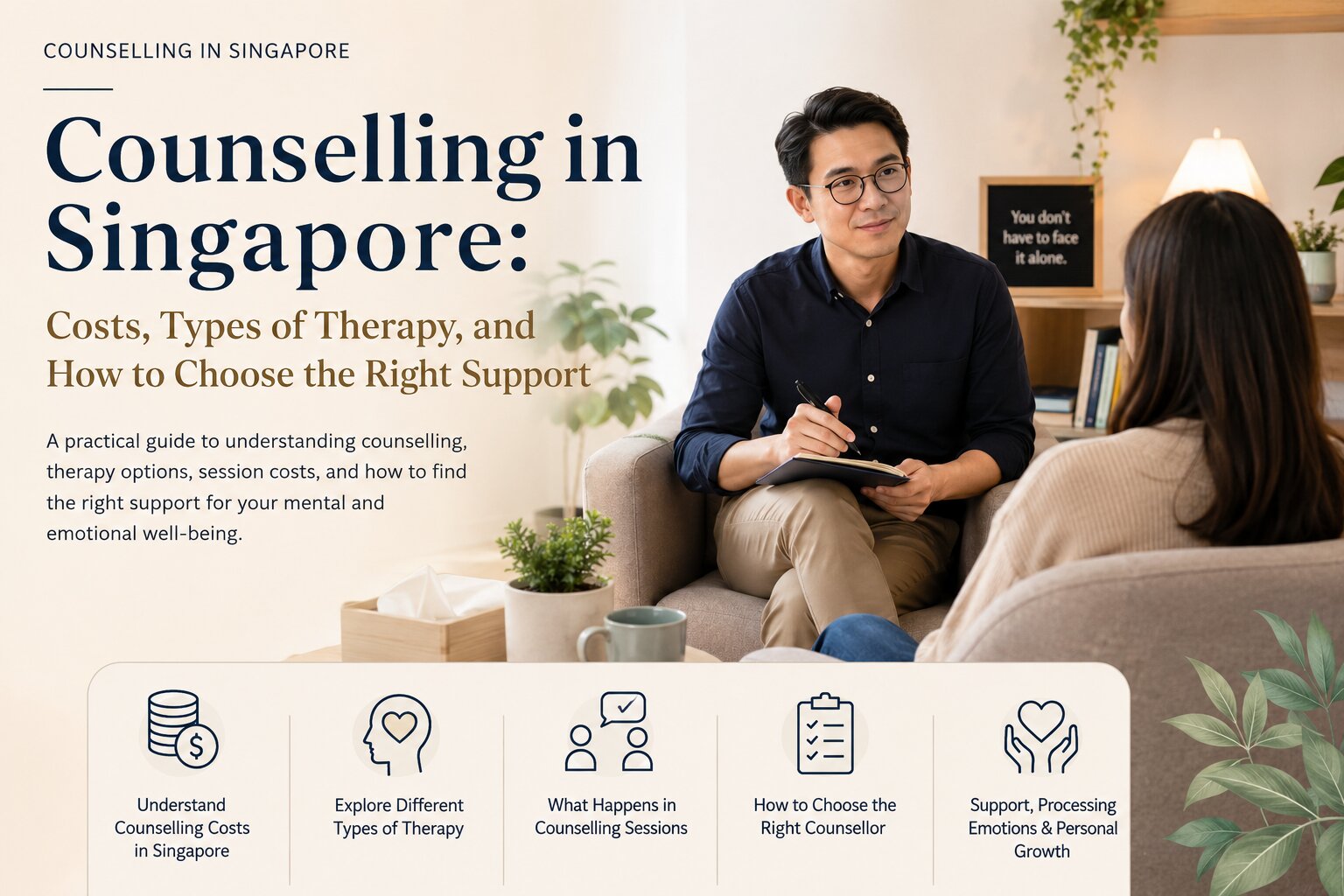
Counselling in Singapore: Costs, Types of Therapy & How to Choose Support A Singapore Guide to CBT, Counselling, and Psychotherapy Support


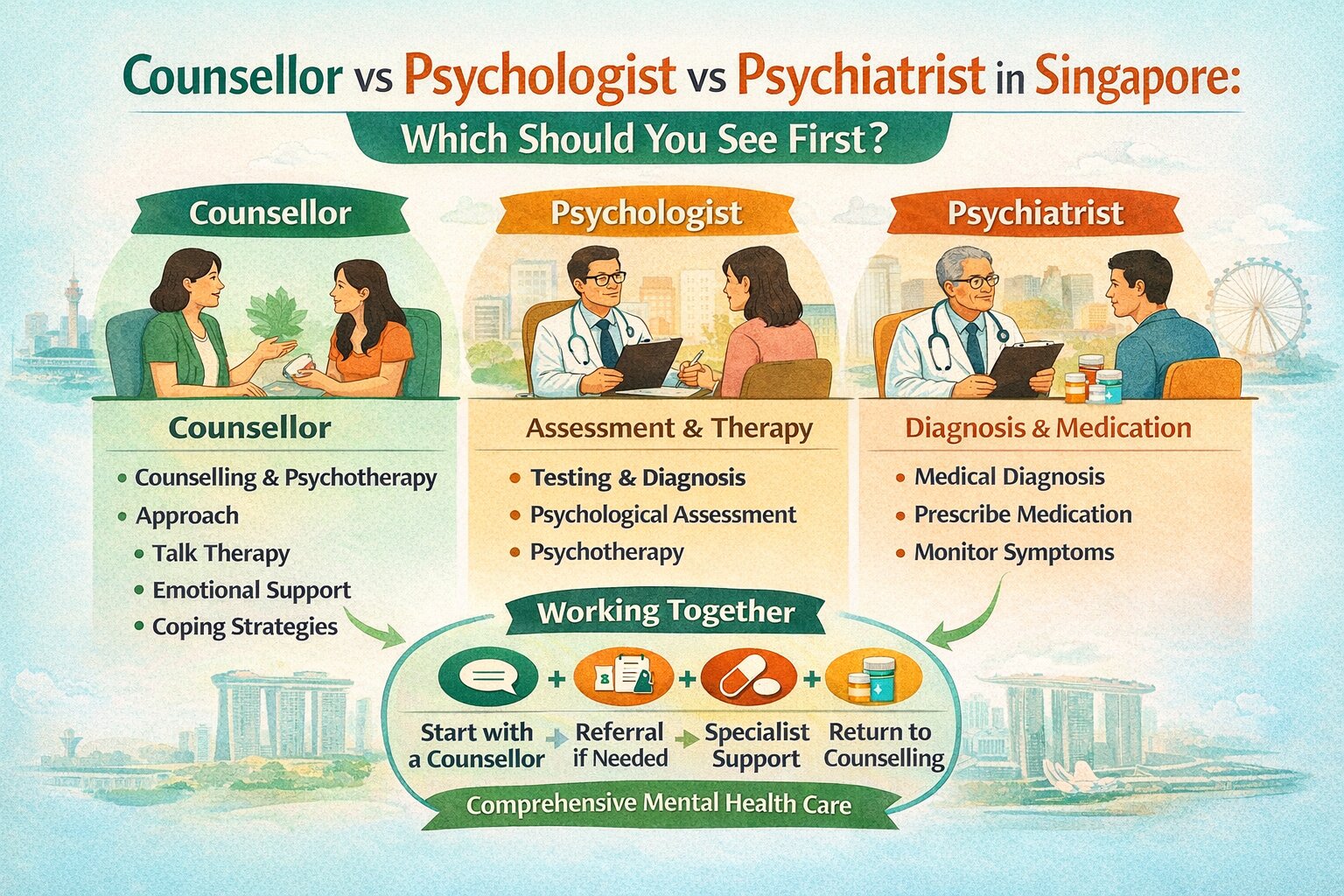
Counsellor vs Psychologist vs Psychiatrist in Singapore: Which Should You See?


If you like what you read, follow us on Facebook, Instagram, LinkedIn, or Tik Tok to get the latest updates.


Have a question? Reach out to us through our contact form or WhatsApp.


Want to speak to our clinicians? Book your appointment here!

SHARE WITH:

paper plane

Join Our Newsletter

Subscribe to our newsletter and receive daily updates & promotions!