




Counsellor vs Psychiatrist in Singapore: Who Should You See First?
Singapore
You may still be getting through work, caring for your family and keeping up with everyday responsibilities, while feeling anxious, drained or overwhelmed inside. Perhaps something painful has happened. Perhaps nothing dramatic has changed, but you have noticed that life feels harder than it used to.
When you begin looking for help, another question appears: should you see a counsellor or a psychiatrist first?
If you are seeking emotional support, help understanding recurring difficulties, or practical ways to cope and move forward, a suitably trained counsellor can be a good first step. You can approach a counsellor directly without first seeing a psychiatrist or obtaining a diagnosis.
At The Lion Mind (Lion Counselling Pte. Ltd.), counselling provides dedicated time to explore what you are facing, receive professional support and work towards changes that matter to you. You do not need to arrive with the right words or a complete explanation. We can begin with what feels difficult now.
Why Start with a Counsellor?
Many people seek counselling because they want help with experiences that are affecting their wellbeing, relationships or everyday life.
You might feel constantly on edge, struggle to switch off after work, find yourself repeating a painful relationship pattern, or feel unsure how to move through grief or a major life change. These are meaningful reasons to seek support.
A trained counsellor brings a therapeutic relationship, psychological understanding and practical skills to the work. Together, you can explore what has been happening, identify patterns and consider responses that fit your circumstances.
You Can Seek Support Before Things Become Unmanageable
You do not have to wait until you can no longer work, study or care for yourself before seeking counselling.
Sometimes, the concern is the effort it takes to keep going. You may appear capable to others while spending your evenings exhausted, worrying about conversations or feeling that you have no room for your own needs.
Counselling gives those experiences attention. It provides a place to speak openly and begin addressing difficulties that you have been carrying alone.
You Can Receive Support Without Having Everything Figured Out
You may know that you need help without knowing what you want to change.
That is a valid starting point. A counsellor can help you put feelings into words, explore conflicting needs and make sense of what matters to you. Some sessions may focus on coping with a difficult week or processing a loss. Others may involve working on a particular pattern or decision.
Your counselling does not have to begin with a major goal. Feeling understood and finding a more manageable way through the present can be valuable in themselves.
What Does a Counsellor Actually Do?
Counselling combines attentive listening with purposeful therapeutic work. Depending on your needs and the counsellor’s training, sessions may involve:
- Understanding the connections between thoughts, emotions, behaviour and physical responses.
- Exploring experiences and relationships that continue to affect you.
- Working on patterns such as avoidance, harsh self-criticism or difficulty setting boundaries.
- Developing practical ways to communicate, cope and respond differently.
- Reviewing what helps and adjusting the work as your needs become clearer.
For example, imagine that you feel guilty whenever you decline an additional task at work. You already know that your workload is too much, but saying no leaves you anxious about disappointing people.
Counselling can explore both the practical pressure and the beliefs that make it difficult to protect your time. You might work on recognising the guilt, developing a realistic response to it and practising a boundary you feel able to use.
Your counsellor also considers the situation around you. An unreasonable workload, financial strain or a difficult relationship deserves attention alongside your emotional responses. This helps make counselling relevant to the life you actually lead.
Read more about the role of a counsellor.
Counselling at The Lion Mind
At The Lion Mind, professional counselling brings together emotional support, reflection and practical therapeutic work. The focus is on understanding your concerns and developing a direction that is useful to you.
Person-centred Approaches place your experiences, values and preferences at the centre of the counselling relationship. Your feedback matters, including when something feels difficult, unclear or unhelpful.
Cognitive Behaviour Therapy (CBT) can help you understand how particular thoughts and behaviours contribute to a difficulty and explore ways of responding differently. This may include working with worry, avoidance, self-criticism or patterns that keep you feeling stuck.
The work is tailored to your concerns. For one person, the priority may be coping with anxiety. For another, it may be grief, relationship difficulties or the emotional weight of prolonged stress. Where useful, sessions can include an agreed Action Plan to practise or reflect on between appointments.
Learn more about Cognitive Behaviour Therapy at The Lion Mind.
What Does a Psychiatrist Do?
A psychiatrist is a medical doctor specialising in mental health. Their responsibilities include medical assessment, diagnosis, prescribing medication where appropriate and reviewing its benefits and side effects. American Psychiatric Association: What Is Psychiatry?.
If your main reason for seeking help is dedicated counselling to process experiences, understand patterns and develop practical ways forward, you can begin directly with a suitably trained counsellor. If you need specialist medical assessment or medication advice, a psychiatrist has a different role to fulfil.
Can a Counsellor Help If You Already Have a Diagnosis?
Yes. Having a mental health diagnosis does not automatically make counselling unsuitable.
Counsellors with relevant training and experience can work with people experiencing mental health conditions, taking account of the person’s needs and any other care they are receiving. Ask about the practitioner’s experience with your particular concern and how they would approach the work.
A diagnosis may help inform care, but it does not describe everything about your experience. Counselling can address the worries, relationships, habits, losses and everyday pressures that affect your wellbeing.
At The Lion Mind, you can discuss these concerns and explore a suitable counselling direction, whether you are seeking support for the first time or already receiving medical care.
When Might Medical Care Be Helpful?
Medical assessment is useful when you need advice about medication, symptoms may have a physical cause, or there are significant changes in your mental state or ability to function safely.
A GP can be a starting point for medical assessment; a psychiatrist provides specialist mental health medical care. Singapore’s Ministry of Health describes both primary and specialist mental health services in its guide to available support.
Where medical care is needed, counselling can remain part of your support. The aim is to bring together the help relevant to your circumstances.
Can You Have Counselling and Medical Care Together?
Yes. You do not necessarily need to complete one before starting the other.
For example, you may be receiving medical treatment while attending counselling to work on anxiety patterns, relationships, coping or the emotional impact of what you are experiencing.
Medication decisions remain with your prescribing doctor. Your counsellor can focus on the emotional and practical work relevant to your goals. Where appropriate and with your consent, professionals may coordinate aspects of your care.
Counselling is a meaningful part of support in its own right and can continue alongside medical treatment when useful.
What Happens at Your First Counselling Session?
Your first 50-minute counselling session at The Lion Mind gives you time to explain what has brought you in and how it has been affecting your life.
Your counsellor will explore your concerns, discuss what you hope to receive from counselling and explain how the work may develop. You can ask questions about the approach, confidentiality, fees and future sessions.
You can begin with something as simple as, “I have been feeling overwhelmed, and I am not sure why.” You do not need to prepare a polished story.
The frequency and number of sessions can be discussed and reviewed according to your needs and progress.
Read what to expect in your first counselling session.
If You Need Immediate Support
If you are in immediate danger or unable to keep yourself safe, seek urgent help: call 995 for an emergency ambulance or go to the nearest A&E department. For 24-hour emotional crisis support, call Samaritans of Singapore at 1767. Singapore emergency contacts, SOS support services.
Take the First Step with The Lion Mind
You do not have to carry a difficulty alone simply because you are still managing your responsibilities. Counselling offers time, professional support and a relationship in which your experience can receive proper attention.
If you are looking for counselling in Singapore, The Lion Mind welcomes you to begin with what you are facing now. Our centre is located at 3 Ubi Avenue 3, #05-01, Singapore 408857.
Book your counselling appointment or contact us on WhatsApp to ask about getting started.
Related articles

Counsellor vs Counselling Psychologist in Singapore: What’s the Difference and Who Should You See?
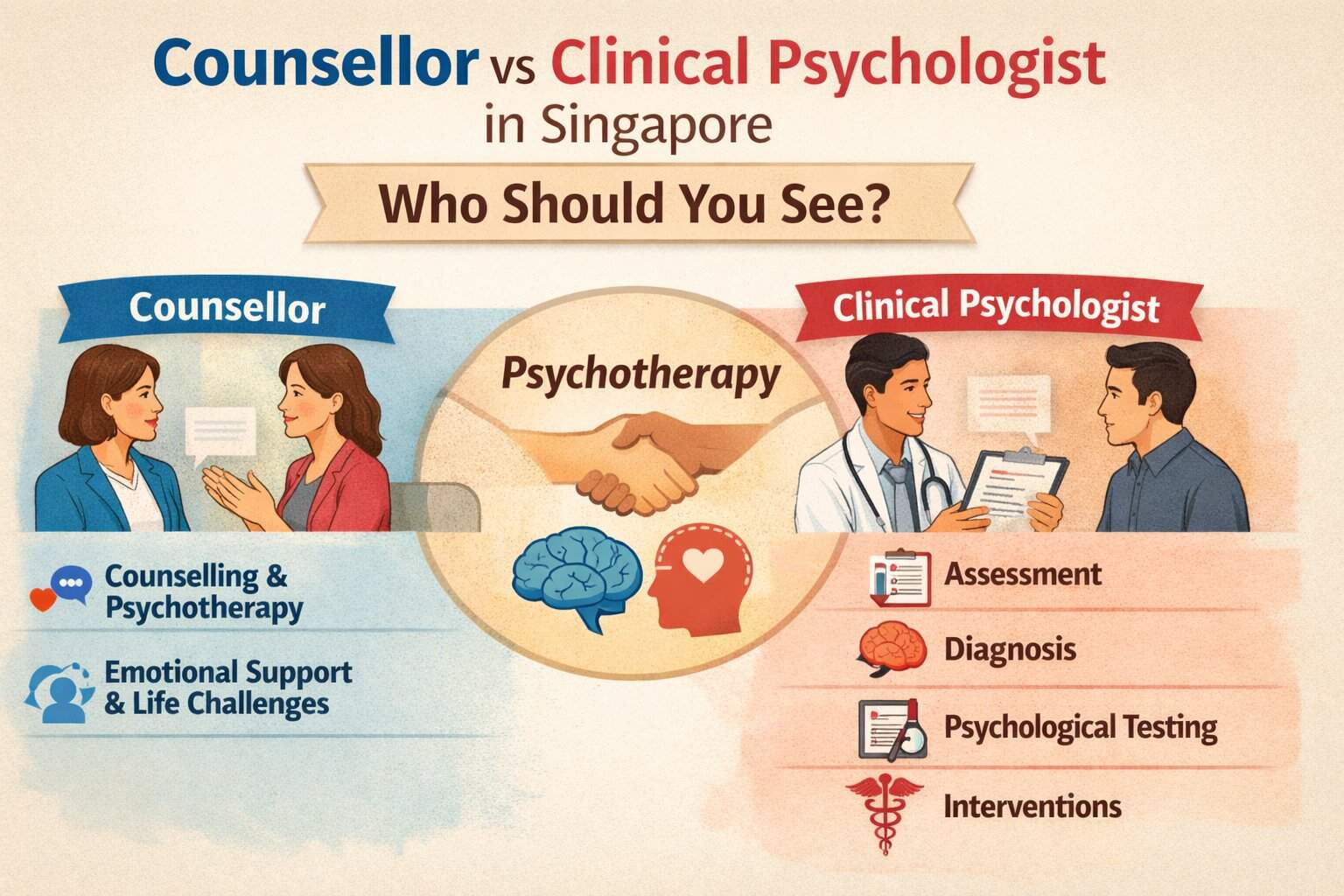
Counsellor vs Clinical Psychologist in Singapore: Who Should You See?
If you like what you read, follow us on Facebook, Instagram, LinkedIn, or Tik Tok to get the latest updates.
Have a question? Reach out to us through our contact form or WhatsApp.
Want to speak to our clinicians? Book your appointment here!