
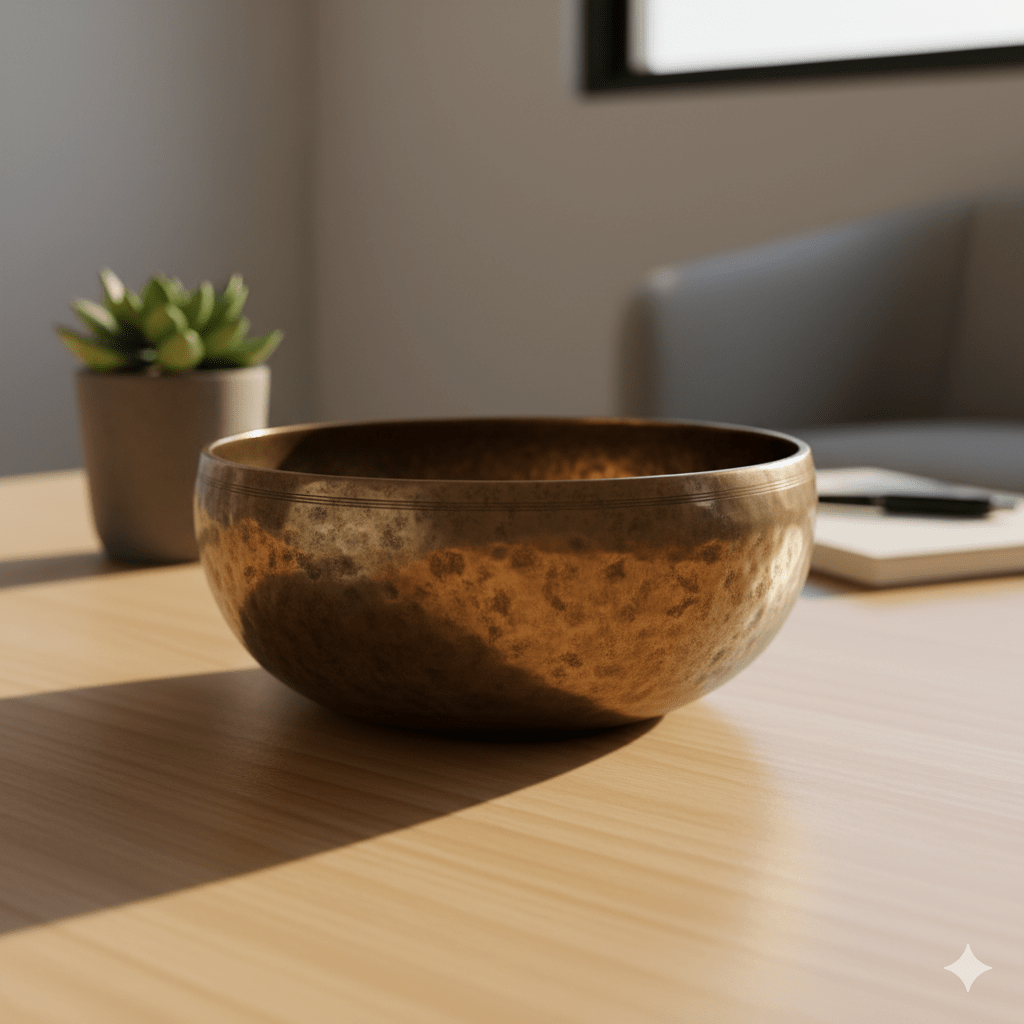
Close-up illustration of a bronze singing bowl with textured hammer marks, resting beside a mallet on a wooden table.

The Craft of Moon Bowls — Hand-Made Healing from Nepal

Singapore

Before a singing bowl fills a room with sound, there is the work that gives it shape.

Metal is heated, formed and worked by hand. A craftsperson pays attention to the developing bowl, making adjustments through a process that calls for skill and patience.

Knowing something about that work can change the way you approach the instrument. You may find yourself looking more closely, listening a little longer and appreciating the human effort behind its presence.

At The Lion Mind, operated by Lion Counselling Pte. Ltd., Mr James Chong incorporates a singing Moon Bowl from Nepal into counselling. Its sound creates an occasion for reflection, while its craftsmanship and associations with the moon offer rich possibilities for personal and spiritual meaning.

The Hands Behind the Sound

Handcrafted singing bowls bring together metalworking and an attention to sound.

Healing Singing Bowls, a manufacturer based in Nepal’s Kathmandu Valley, describes a production process involving metal preparation and casting, followed by repeated heating and coordinated hand-hammering to form the bowls. Finishing and decoration may involve other specialist work. 

The word “handmade” can therefore describe several stages of skilled work. It does not necessarily mean that every part of production follows one identical method.

What makes this craft interesting is the attention involved. The bowl gradually takes shape through the maker’s decisions and handling of the material.

For a listener, understanding that process can add another dimension to the experience: an appreciation of something made with time and care.

How a Singing Bowl Takes Shape

The details vary between workshops, but descriptions of hand-hammered production commonly include repeated cycles of heating and shaping.

Heating allows the metal to be worked. Hammering gradually develops the bowl’s form. The maker continues shaping and finishing until the instrument reaches its intended condition.

The marks left by this work can contribute to the visual character of a handmade bowl. Its surface may carry variations that draw the eye and invite a closer look.

There is something appealing about seeing evidence of human work in an object. You may appreciate the texture, the weight or the way light falls across its surface.

That appreciation can be part of how you enter a listening experience.

What Connects a Singing Moon Bowl With the Moon?

Some makers link the production of their Moon Bowls to the full moon.

For example, Aparmita describes its Full Moon singing bowls as hand-hammered on full-moon nights. This is the maker’s account of its own collection and the meaning it attaches to that practice. Manufacturing details should be understood through the provenance of the particular bowl. 

The moon also offers a personal and spiritual point of connection.

Its changing appearance can invite reflection on cycles, transition and renewal. A period of uncertainty may bring questions about what is ending and what is beginning. Someone feeling depleted may find meaning in the idea of allowing time for rest.

These associations can be explored as spiritual or symbolic meanings. They do not need to become a prescribed explanation of what you should experience.

At The Lion Mind, the singing Moon Bowl comes from Nepal. Your own response to its sound and meaning helps shape the counselling conversation.

Listening to the Character of the Bowl

A singing bowl produces a layered sound that develops and fades as it is played.

You may notice one tone first, then become aware of other qualities as you continue listening. The sound may feel full, delicate, bright or lingering to you.

There is room to appreciate those qualities without needing technical knowledge. You can begin by noticing what draws your attention.

The individuality of a handcrafted instrument can be valued for its workmanship, appearance and sound. That appreciation does not depend on claiming that handmade bowls produce better therapeutic outcomes than other bowls.

Within counselling, the more useful question is how you experience the instrument and what that experience brings into focus.

Craftsmanship as an Invitation to Reflect

A handmade object can offer a starting point for thinking about your own life.

You might be drawn to the patience involved in its making. Perhaps you recognise how rarely you allow yourself time to develop, learn or recover without demanding an immediate result.

You may appreciate its individual character and begin considering the expectations you hold about how you should look, feel or behave.

These are possibilities for reflection, rather than meanings built into the object.

For example, someone who feels pressure to appear composed might find themselves thinking about the effort involved in keeping that appearance. The conversation could then explore what it would feel like to be more honest about needing support.

The bowl provides something to engage with. Your experience gives the reflection its meaning.

Making Room for Spiritual Connection

For some people, the singing Moon Bowl is a meaningful part of spiritual exploration.

Listening may become a moment to contemplate compassion, gratitude, belonging or a sense of connection with something larger than everyday responsibilities.

You might bring an intention into the session: making room for renewal, considering what you value or approaching yourself with greater kindness.

At The Lion Mind, Mr James Chong welcomes these themes within counselling. You can speak about the experience in language that reflects your beliefs and understanding.

There is also room for questions. You do not need to be certain what an experience means before exploring it.

From Craftsmanship to the Counselling Room

The story of an instrument can deepen your interest in it. The counselling session provides space to discover what that interest means for you.

Mr James Chong begins with what brings you to counselling. When singing Moon Bowl work forms part of the session, he explains the experience and discusses your comfort.

You can listen to the sound as it changes, notice your response and take time afterwards to reflect.

Perhaps an emotion becomes easier to describe. Perhaps you recognise how much you have been rushing. Perhaps the experience simply gives you a moment to consider something important without interruption.

Those observations can be explored within the wider conversation about your life, relationships and hopes.

Experience Singing Moon Bowl Healing at The Lion Mind

You do not need to understand metalworking, identify musical notes or have experience with spiritual practice to appreciate a singing Moon Bowl.

You can begin with curiosity about the instrument, its sound and what you notice while listening.

At The Lion Mind, Mr James Chong brings singing Moon Bowl healing and counselling together, with room for emotional reflection, personal understanding and spiritual meaning.

The singing Moon Bowl from Nepal offers a point of connection between an appreciation of craft and the experience you bring into the room.

Book a counselling appointment with Mr James Chong at The Lion Mind to explore how singing Moon Bowl healing can form part of your session.

Related articles

What Is Moon Bowl Healing? A Gentle Introduction to Sound Therapy in Counselling
The Benefits of Experiential Guidance with OH Cards


If you like what you read, follow us on Facebook, Instagram, LinkedIn, or Tik Tok to get the latest updates.


Have a question? Reach out to us through our contact form or WhatsApp.


Want to speak to our clinicians? Book your appointment here!


Share with:

Join Our Newsletter

Subscribe to our newsletter and receive daily updates & promotions!